Skin Condition
Fine Lines & Wrinkles:
Rejuvenate and Restore Your Youthful Radiance
As we age, our skin naturally undergoes changes, leading to concerns like fine lines, wrinkles, and a loss of that smooth, plump quality we associate with youth. At Dermal Glow, we understand the science behind these changes and offer a comprehensive suite of advanced treatments designed to stimulate your skin's own repair processes, restoring a smoother, more radiant complexion.
Understanding the Ageing Process
Skin ageing is, at its core, a story about collagen. From around the age of 20, our bodies begin producing roughly one percent less collagen every year — often described simply as losing a teaspoon of collagen annually. It sounds small, but it compounds. By our 40s and 50s, decades of this gradual decline add up to visibly thinner, less resilient skin, with reduced ability to bounce back from daily wear and tear. Alongside this, elastin — the protein that gives skin its "snap back" elasticity — also diminishes, and the two losses together are what show up on the surface as fine lines and wrinkles.
How Our Treatments Work on Fine Lines and Wrinkles
Modern aesthetic medicine works by tapping into this biology rather than fighting against it. Many of our treatments are built around a simple but powerful principle: controlled injury triggers repair. When we create a precise, controlled wound response in the skin — whether through micro-injury from needling, thermal energy from light-based devices, or the introduction of bio-stimulatory substances — the body responds the way it always has to injury, by laying down new collagen. Crucially, this isn't just any collagen. The initial wound-healing response favours Type III collagen, the more immature, "scaffolding" type laid down quickly to repair tissue. Over the following weeks and months, this gradually remodels and matures into Type I collagen, the dense, structural collagen that makes up the majority of healthy, youthful skin. This natural progression from Type III to Type I is why results from collagen-stimulating treatments build gradually and continue improving for months after treatment, rather than appearing overnight.
Understanding this process also explains why we often recommend a course of treatments rather than a single session, and why combining different modalities can be so effective. Each treatment type stimulates the collagen-remodelling cascade slightly differently and at different depths within the skin, so a tailored combination can address fine lines from multiple angles, working with your skin's natural timeline to produce results that look like a refreshed, well-rested version of yourself, not an obviously "treated" one.
Why it happens
What Causes Fine Lines and Wrinkles?
Several factors contribute to the visible signs of ageing, some within our control and some not:
Sun Damage (Photoageing):
Prolonged UV exposure is the leading cause of premature ageing, breaking down collagen fibres and causing deeper, more pronounced lines.
Natural Biological Ageing:
As we get older, cellular turnover slows and the body naturally produces less collagen and elastin year on year.
Repeated Muscle Movement:
Expressions like frowning, squinting, and smiling create dynamic wrinkles that, over time, can etch into the skin even at rest.
Lifestyle Factors:
Smoking, poor nutrition, dehydration, and lack of sleep accelerate ageing by increasing oxidative stress in the skin.
Our Go-To Treatments for Fine Lines and Wrinkles
We combine cutting-edge technology with expert care to provide tailored solutions that stimulate your skin's natural regenerative processes.

-
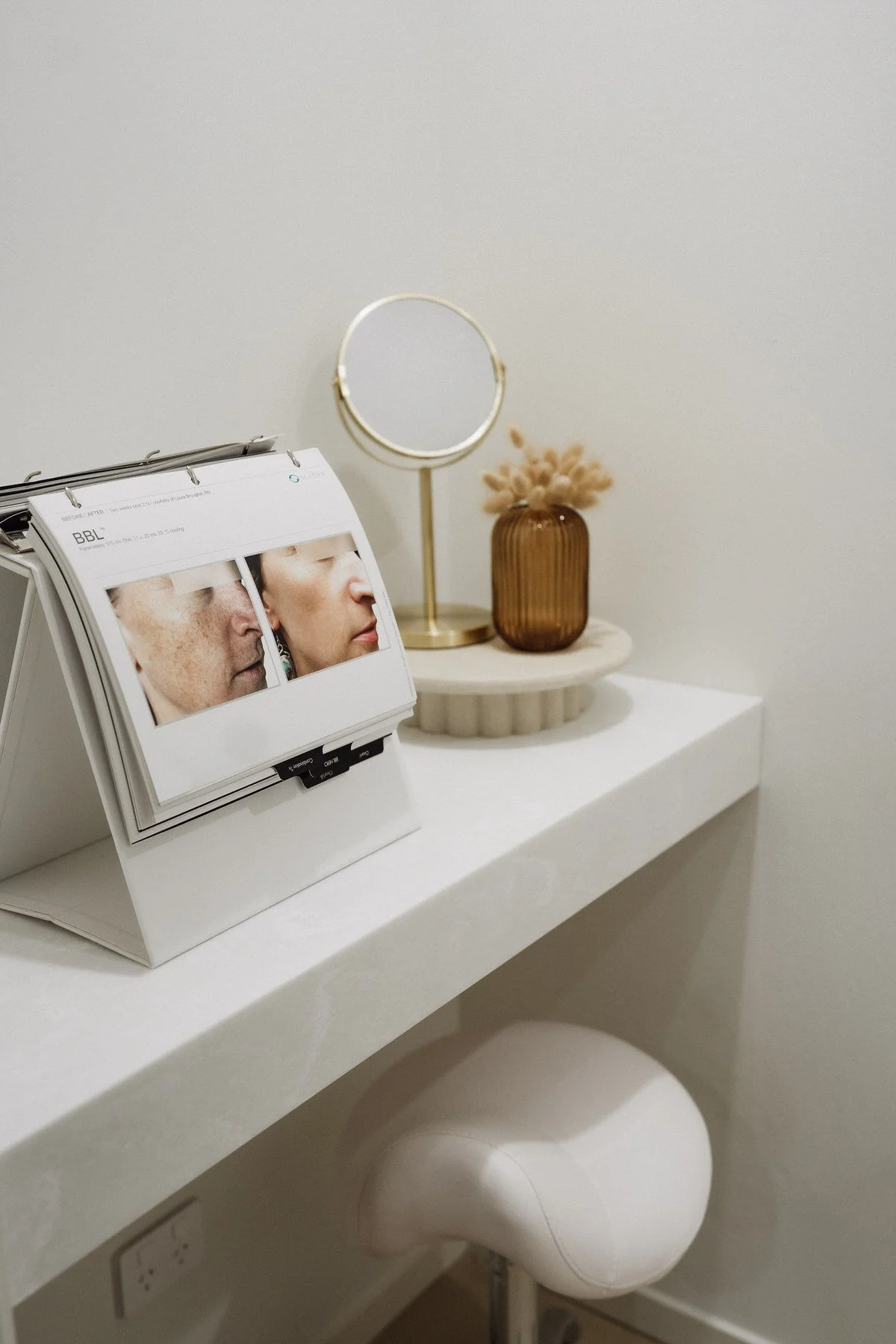
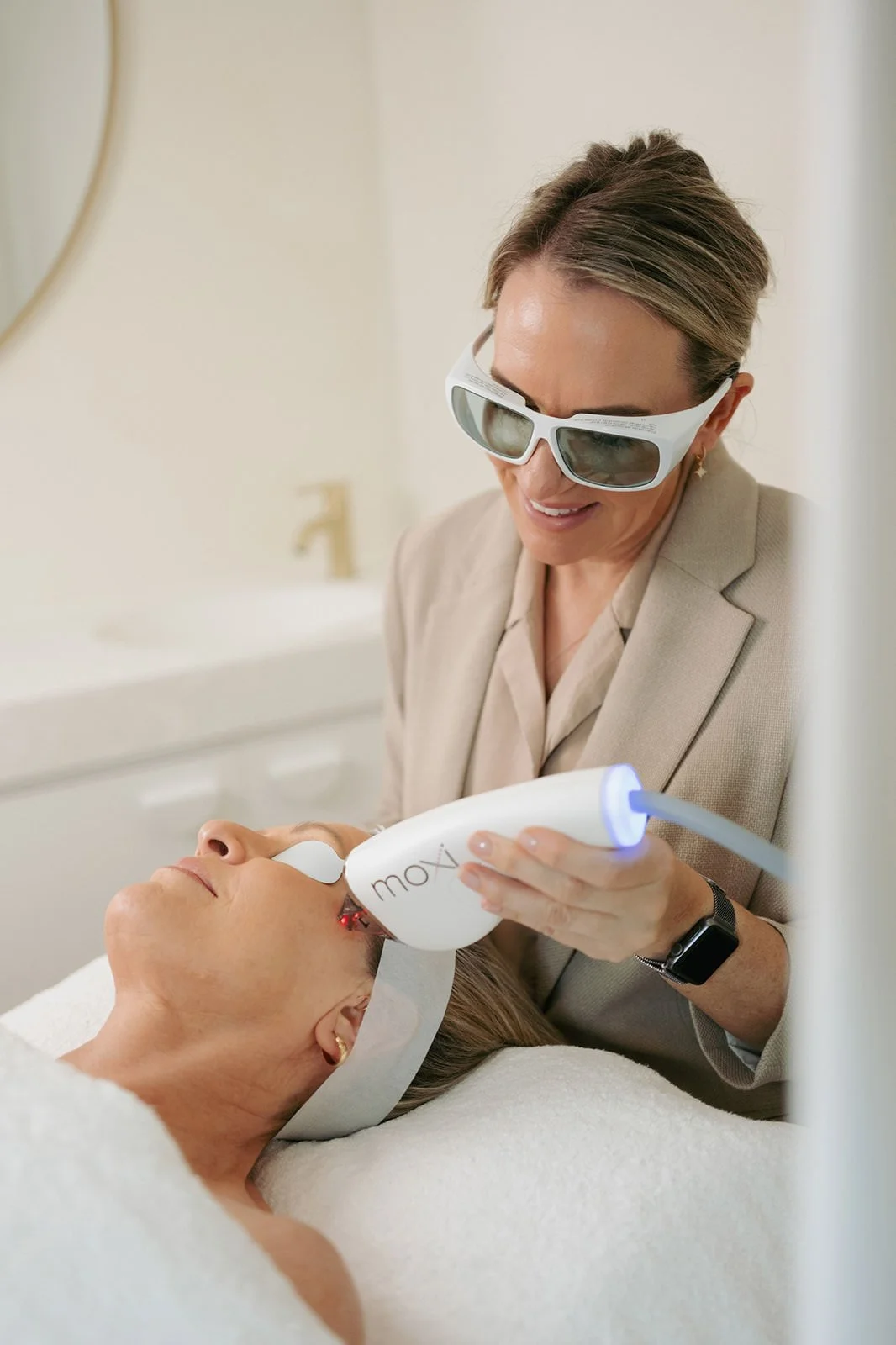
BBL + Moxi
Our signature combination treatment, pairing BBL® Broadband Light with the MOXI™ fractional laser. BBL targets tone, pigmentation, and stimulates collagen at a molecular level, while MOXI's micro-fractional energy refines texture and softens fine lines — together delivering more comprehensive rejuvenation with minimal downtime than either treatment alone.
-
BBL Forever Young:
A specific BBL protocol designed to switch on youthful gene expression in skin cells, supporting long-term collagen renewal with regular maintenance treatment.
-
Bio-Stimulators
Advanced injectables like Rejuran®, Sunekos®, Jalupro®, and HArmonyCa™ that trigger the wound-healing cascade to rebuild collagen and elastin from within
-
Skin Needling
Controlled micro-injury via fine needles that triggers the body's natural collagen induction process, improving fine lines and overall skin quality.
-
Anti-Wrinkle Injections
Precisely relax the muscle movements that cause dynamic wrinkles on the forehead, between the brows, and around the eyes.